
Should I File a Claim for Roof Damage? A Minnesota Homeowner's Decision Guide
In Part 1, we covered when the insurance clock starts after a Minnesota hailstorm. Once homeowners
understand their Date of Loss, the next question almost always follows:
“So… should I file a claim?”
It's a fair question. It's also not one a contractor can fully answer for you.
Key Takeaway:
Discovering storm damage and deciding whether to file an insurance claim are two separate decisions. A contractor can tell you what's damaged and what repairs would cost. Whether filing a claim makes sense for your situation is a decision best made with input from your insurance carrier or another licensed professional.
Not Every Inspection Leads to a Claim — And Not Every Claim Leads to Repairs
At Twin City Roofing Construction Specialists, we don't believe every storm damage inspection should
result in an insurance claim, and we certainly don't believe homeowners should avoid legitimate claims
simply because the process can be complicated.
Our goal is to help homeowners understand the factors that may be worth considering before making
that decision.
Sometimes the right answer is filing a claim.
Sometimes the right answer is making repairs outside of insurance.
Sometimes the right answer is documenting existing conditions and monitoring the property over time.
Every home, every policy, and every situation is different.
That is why we believe in a simple philosophy:
Documentation First. Decisions Second.
A Storm Damage Inspection Answers a Different Question Than an Insurance Claim
One of the biggest misunderstandings after a storm is assuming that discovering damage automatically
means filing an insurance claim is the next step.
In reality, those are two different decisions.
A professional storm damage inspection answers a construction question:
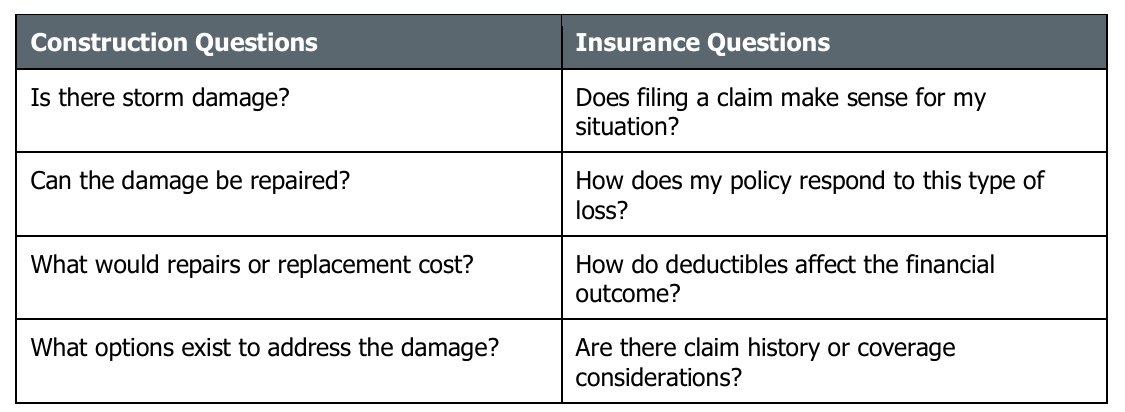
Our role as contractors primarily lives in the left column.
Questions involving coverage interpretation, policy language, deductibles, claim history, or underwriting
considerations belong in conversations with your insurance carrier or other appropriately licensed
professionals.
Understanding the condition of your home first often makes those conversations easier and helps
homeowners make decisions with confidence rather than assumptions.
A Simple Example
Two neighbors on the same street can go through the same hailstorm and reasonably land on different
decisions.
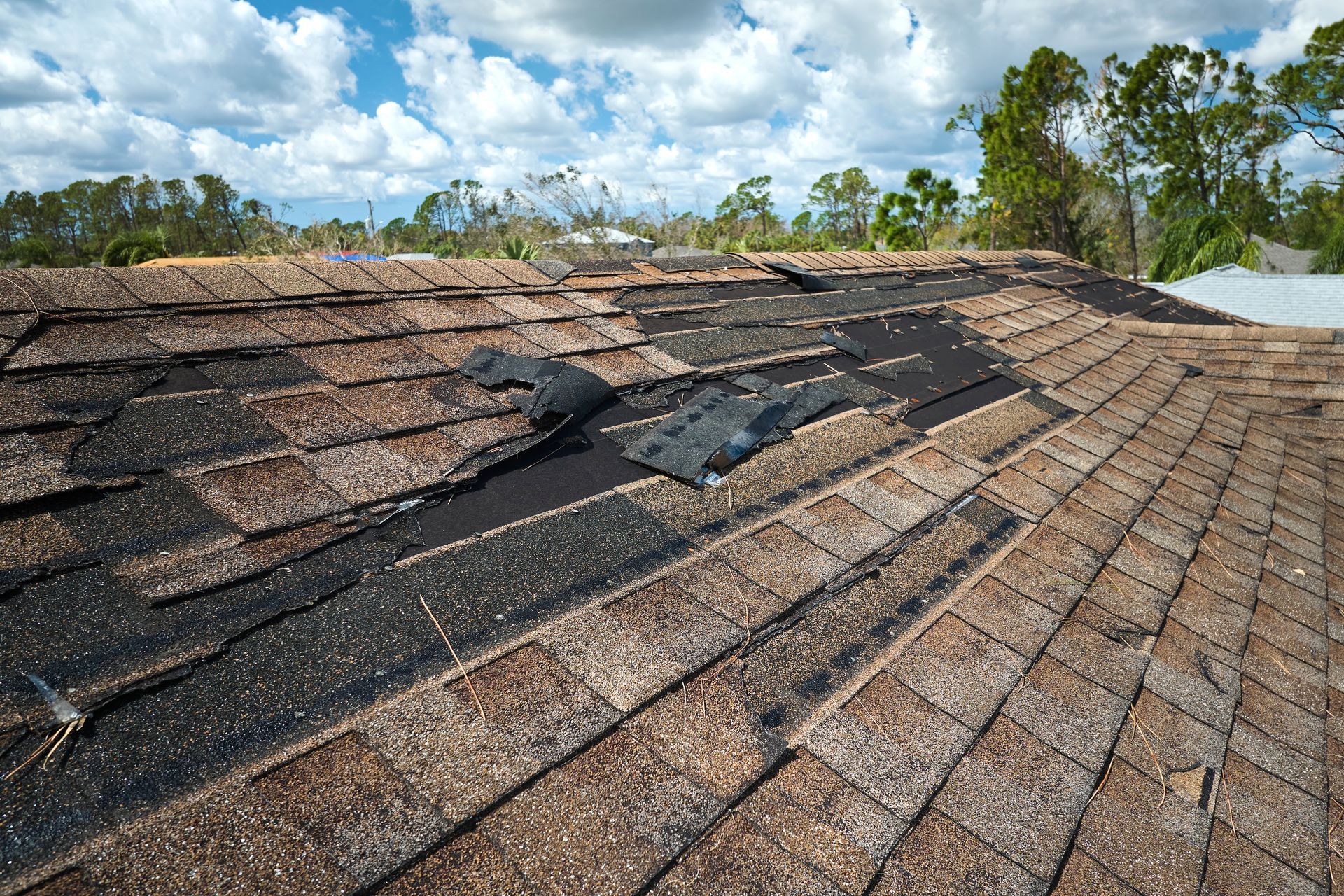
One homeowner's roof shows scattered cosmetic granule loss with no impact to the shingles' functional
performance. The repair estimate comes in well under their deductible. Filing a claim may not make
financial sense for that homeowner.
The homeowner next door has functional hail impacts across multiple slopes, along with damaged
gutters and soft metal components. The estimated cost clears their deductible by a wide margin, and
the damage may affect the roof's remaining service life.
Same storm. Same street. Two different answers because the decision depends on the specific
damage, the specific policy, and the specific numbers involved, not on the fact that a storm occurred.
This is why we document first: the numbers and photos are what make the second decision possible.
Questions Worth Asking Before You Decide
Once you have a documented inspection in hand, these are the kinds of questions worth raising with
your insurance carrier or agent before deciding whether to file:
- What is my deductible for wind or hail losses specifically? Some policies apply a separate percentage-based deductible for these events.
- Does the estimated repair cost exceed that deductible by a meaningful amount?
- How, if at all, could filing a claim affect future premiums or renewal?
- Are there time-sensitive concerns: an active leak, exposed decking, code-required upgrades that need attention regardless of whether a claim is filed?
- Am I comfortable choosing my own contractor rather than one recommended by the insurer?
- Is my roof currently insured on a replacement cost basis or an actual cash value basis?
You do not need to have these answers before scheduling an inspection. Most homeowners work
through them after they know what they're actually dealing with.
Sometimes the Condition of the Property Matters, Too
Storm damage rarely occurs in a perfect environment.
A roof may already have age-related deterioration, deferred maintenance, previous unrepaired damage, or repairs from a prior claim that were never completed.
Insurance inspections are often performed to evaluate reported storm damage, but they may also document unrelated conditions observed during the inspection process.
Depending on the condition of the property and the underwriting guidelines of the carrier, homeowners may receive recommendations or requirements regarding repairs, maintenance, or replacement of
certain components as a condition of continued coverage.
This is exactly why we encourage documentation early rather than waiting for a carrier-driven deadline.
Knowing where your property stands before a storm forces the issue gives you time to plan and budget
on your own timeline, instead of reacting to someone else's. If cost is a concern, homeowners may also
wish to explore financing options that allow repairs or replacement to occur on their own timeline
rather than under pressure.
What We Recommend
- Get a documented, photographed inspection — even if you're unsure anything is wrong.
- Ask for a written estimate of repair or replacement cost.
- Compare that number to your deductible before contacting your carrier, if you're able to.
- Call your agent or carrier with specific questions rather than a general “is my roof covered.”
- Ask about financing options early if cost is a concern — it's easier to plan ahead than to react under a deadline.
- Keep your documentation regardless of which direction you choose — it holds its value even if you decide not to file.
FAQ: Filing a Claim for Roof Damage
Does a contractor decide whether I should file a claim?
No. A contractor can document damage and provide a repair estimate. Whether filing a claim is the
right decision for your situation is between you and your insurance carrier.
Is a storm damage inspection the same as a claim?
No. An inspection is a documented look at your property's condition. A claim is a formal request to your
insurer for coverage. You can have one without the other.
What if I decide not to file, and later find more damage?
This is exactly why documentation matters early. A dated inspection gives you and your carrier
something concrete to reference later, regardless of when you decide to act on it.
Can filing a claim affect my future insurance rates?
Possibly, depending on your carrier and claims history. This is a question to raise directly with your
agent, since it varies by company and policy.
Can an insurance inspection identify other issues with my roof?
Sometimes. Insurance inspections are typically focused on reported storm damage, but they may also
document other observable conditions of the property. Homeowners with questions about how those
observations may affect their policy should discuss them directly with their carrier.
Summary: What Minnesota Homeowners Should Remember
- Discovering damage and deciding to file a claim are two separate decisions.
- A contractor's role is documenting condition and estimating repair cost — not interpreting coverage or negotiating claims.
- Comparing your estimate to your deductible is often the first practical step.
- Documentation holds its value whether or not you end up filing.
- When in doubt, ask your carrier specific questions rather than general ones.
Documentation First. Decisions Second.
At Twin City Roofing Construction Specialists, we believe homeowners deserve accurate information
before making important decisions — not pressure toward filing a claim either way.
Our exterior assessments include photographs, documentation, and an honest evaluation of your
home's condition, so that whichever direction you choose, you're choosing it with real information
instead of a guess. And if cost is part of what's holding you back from getting started, ask us about
financing options — we'd rather help you plan than have you wait until a decision is made for you.
Schedule a Professional Storm Damage Inspection
Minnesota Storm Recovery Guide
Minnesota Hail Damage Claims: When Does the Insurance Timeline Start?
What Happens During a Storm Damage Inspection? A Look Inside Our Protocol
What Happens After You File a Roof Damage Claim? Working With the Adjuster
How to Vet a Contractor After a Storm, and What Happens Once You Hire One